Two CNC machining quotes for the same part can differ by a factor of three. Some of that is supplier overhead, but most of it comes from how the supplier interprets the drawing and plans the job. Understanding what drives cost helps you design cheaper parts and compare quotes fairly.
1. Machine time
The biggest single cost is usually the time the part spends on the machine. It depends on how much material is removed, how hard the material is to cut, and how many tool changes and finishing passes are needed. A 5-axis machining centre costs more per hour than a 3-axis machine but can be cheaper overall if it removes setups.
2. Setups and fixturing
Each time a part is refixtured, someone has to load, align and check it. Parts with features on six faces may need several setups. Custom fixtures add one-time cost that is spread across the batch.
Reduce it: group features on as few faces as possible, and consider whether a 5-axis approach would reduce setups.
3. Material
Material cost includes the raw stock price and how efficiently it can be used. Titanium and Inconel are expensive to buy and slow to machine. Aluminium 6061 is cheap and fast. Stock size matters too: a part that is 1 mm bigger than a standard bar or plate size may force the next size up.
Reduce it: choose the most machinable material that meets the requirement, and check standard stock sizes. See 6061 vs 7075 and stainless steel grades.
4. Tolerances
Tight tolerances require slower finishing passes, more frequent measurement and sometimes secondary processes. Applying a tight tolerance to every dimension is one of the most common causes of high quotes. Our tolerance guide explains how to tolerance only what matters.
5. Geometry and features
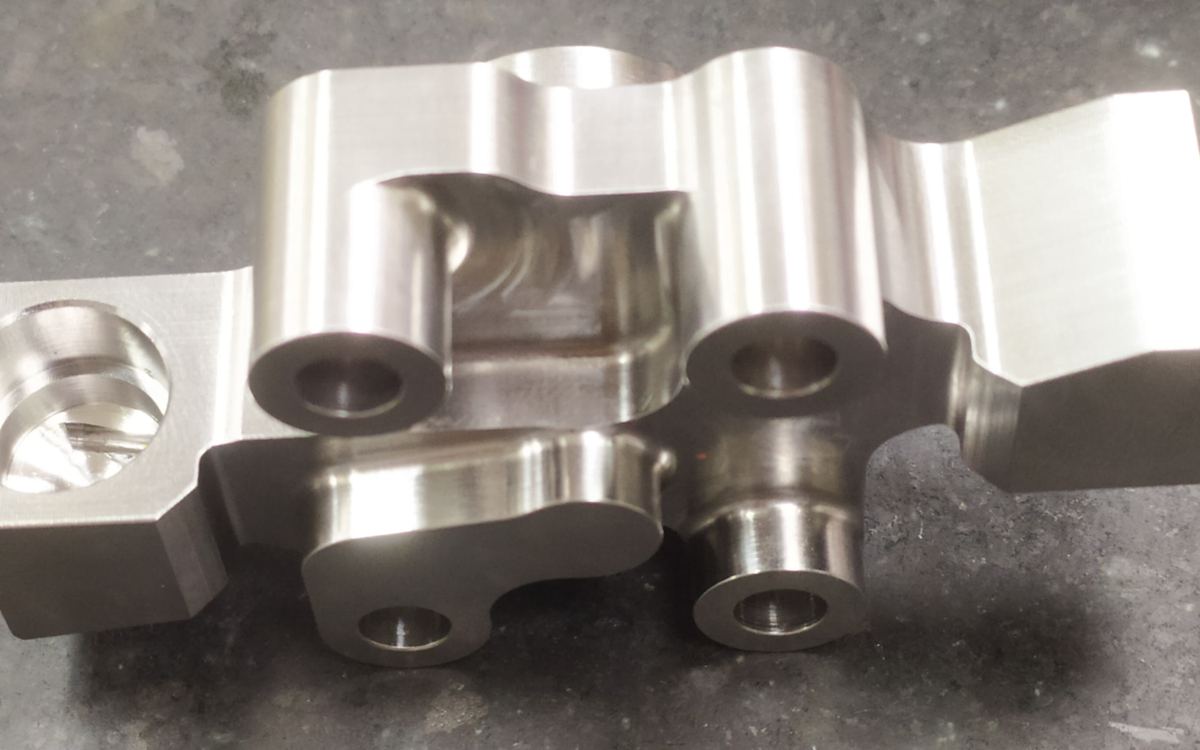
Deep narrow pockets, small internal radii, thin walls, deep holes and tiny threads all need small tools, which cut slowly and break more easily. Sharp internal corners can't be milled at all without EDM.
Reduce it: follow basic design-for-manufacturability rules, such as generous internal radii and pocket depths no more than about 4× the tool diameter.
6. Surface finish requirements
Standard as-machined finish (around Ra 3.2 µm) costs nothing extra. Ra 0.8 µm or better needs additional passes or polishing. Only specify fine finishes on functional surfaces such as sealing faces and bearing seats.
7. Secondary processes
Anodising, plating, passivation, heat treatment, NDT and marking are usually done by specialist subcontractors and add both cost and lead time. Batch these where possible. See our surface finishing guide.
8. Inspection and documentation
A simple certificate of conformity is cheap. A full AS9102 First Article Inspection with CMM reports for every characteristic takes time. Both have their place. Make the requirement clear in your RFQ so suppliers quote the same scope.
9. Quantity
Programming, setup and first-article inspection are fixed costs. Spread over one prototype they dominate the price; spread over 500 parts they almost disappear. Ordering even a modest batch instead of single pieces can sharply reduce unit price.
Comparing quotes fairly
When quotes vary widely, check whether every supplier has quoted the same material certificate, inspection level, finish and delivery terms. A low quote that excludes FAI or material certs isn't really cheaper. Our guide on writing a CNC RFQ helps you get comparable quotes.
At Aeroedge International we review every drawing before quoting and point out features that add cost without adding function. Request a quote and we'll respond within 24 hours.