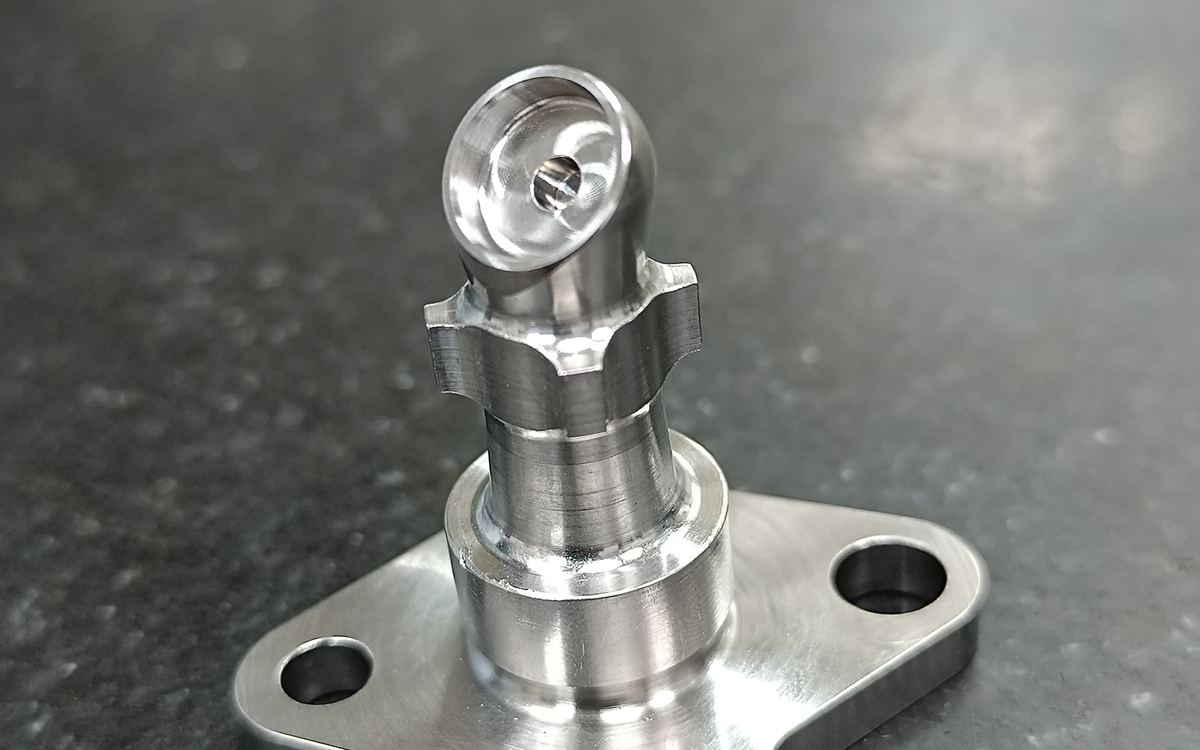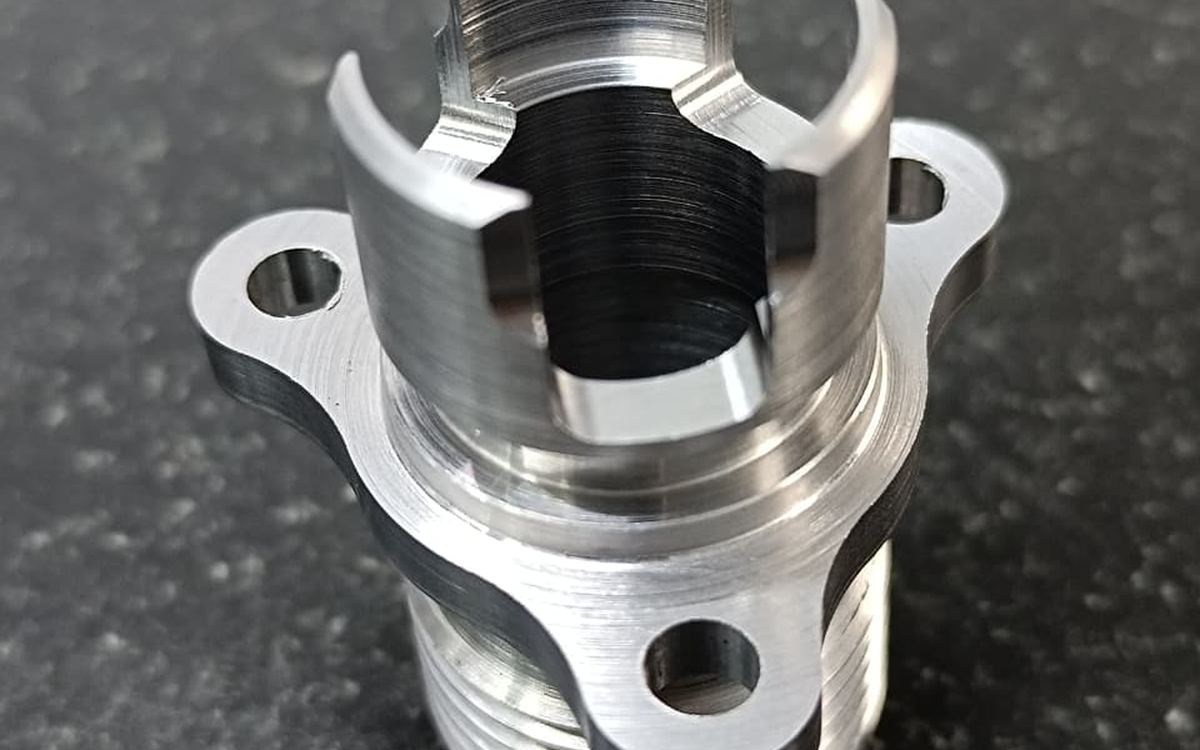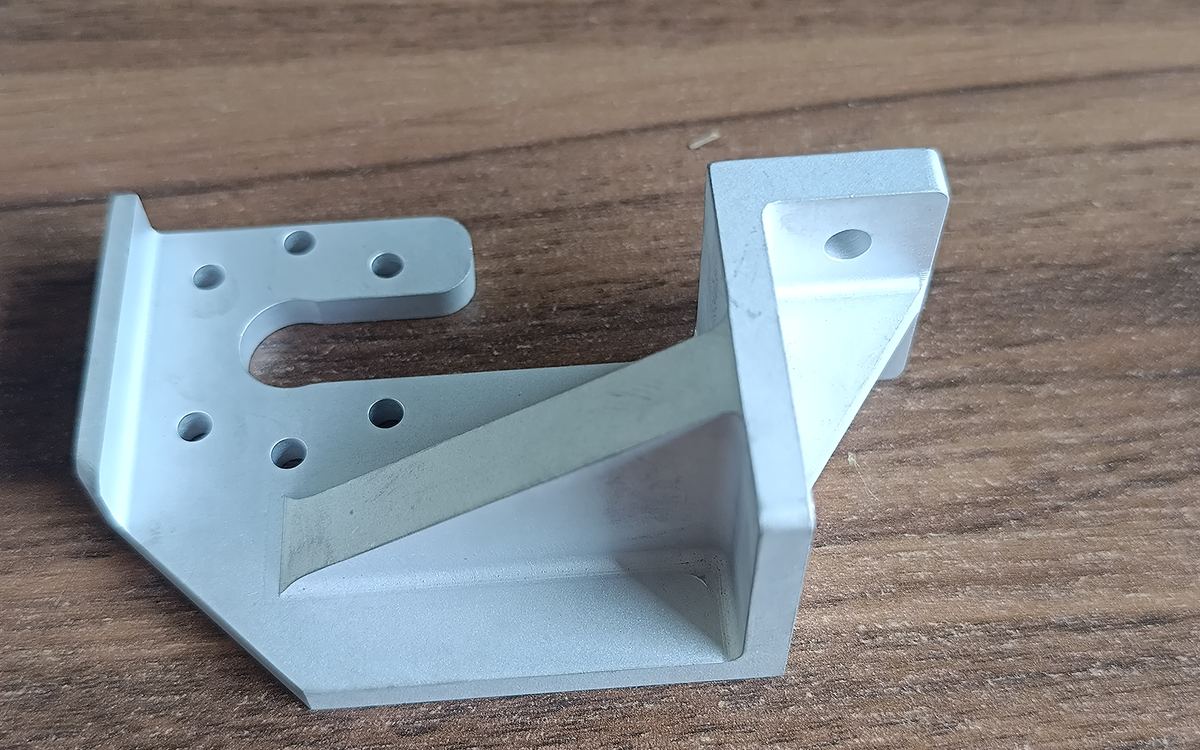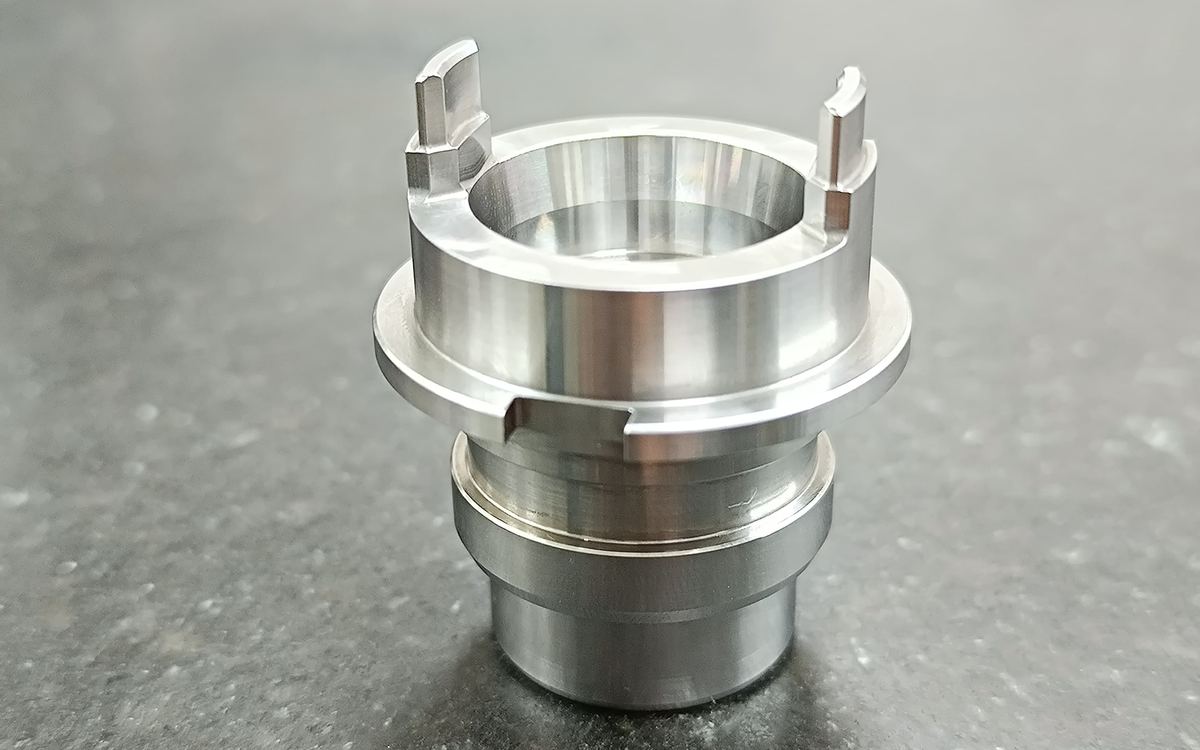
Stainless steel is the default choice for parts that need corrosion resistance with the strength of steel. But stainless grades behave very differently on a CNC machine, and choosing the right one can cut machining cost noticeably without compromising performance.
The four grades buyers use most
| Grade | Family | Machinability | Corrosion resistance | Typical use |
|---|---|---|---|---|
| 303 | Austenitic, free-machining | Best of the stainless steels | Good | Fittings, shafts, fasteners, high-volume turned parts |
| 304 / 304L | Austenitic | Fair, work-hardens | Very good | General industrial, food equipment, enclosures |
| 316 / 316L | Austenitic with molybdenum | Fair, gummy | Excellent, especially chlorides | Marine, chemical, medical, pharmaceutical |
| 17-4PH | Precipitation-hardening martensitic | Good in condition A | Good | Aerospace, valves, high-strength components |
303: the free-machining option
303 has added sulphur, which breaks chips and lubricates the cut. It is the easiest stainless to machine and ideal for high-volume turned parts. The trade-off is slightly lower corrosion resistance and poor weldability. It is not usually used for medical implants or marine environments.
304: the general-purpose grade
304 is the most widely used stainless steel. It has very good corrosion resistance and weldability. On the machine it work-hardens quickly, so tools must stay engaged with a consistent feed; dwelling or rubbing hardens the surface and wears tools fast.
316 / 316L: for harsh environments
The 2–3% molybdenum in 316 greatly improves resistance to chlorides and many chemicals. 316L (low carbon) is preferred for welded parts and is common in medical and pharmaceutical equipment. It machines similarly to 304, slightly gummier.
17-4PH: strength plus corrosion resistance
17-4PH can be heat treated to much higher strength than the austenitic grades. Common conditions include:
- Condition A (solution annealed): easiest to machine, usually aged afterwards
- H900: highest strength and hardness, lowest toughness
- H1025 / H1150: lower strength but better toughness and stress-corrosion resistance
Ageing causes a small, predictable dimensional change, so critical features are sometimes finish-machined after heat treatment. Specify the required condition clearly on the drawing.
Machining tips for stainless
- Use rigid setups and sharp, coated carbide tooling.
- Keep feeds consistent to avoid work hardening.
- Use plenty of coolant to manage heat.
- Specify passivation (e.g., ASTM A967 or AMS 2700) to remove free iron after machining. See our finishing guide.
How to choose
- High-volume turned parts, mild environment: 303
- General use, welding required: 304/304L
- Marine, chemical, medical: 316/316L
- High strength needed: 17-4PH
Aeroedge International machines 304, 316, 17-4PH and other stainless grades, alongside alloy steels such as 4140 and 4340. Request a quote for your stainless steel parts.