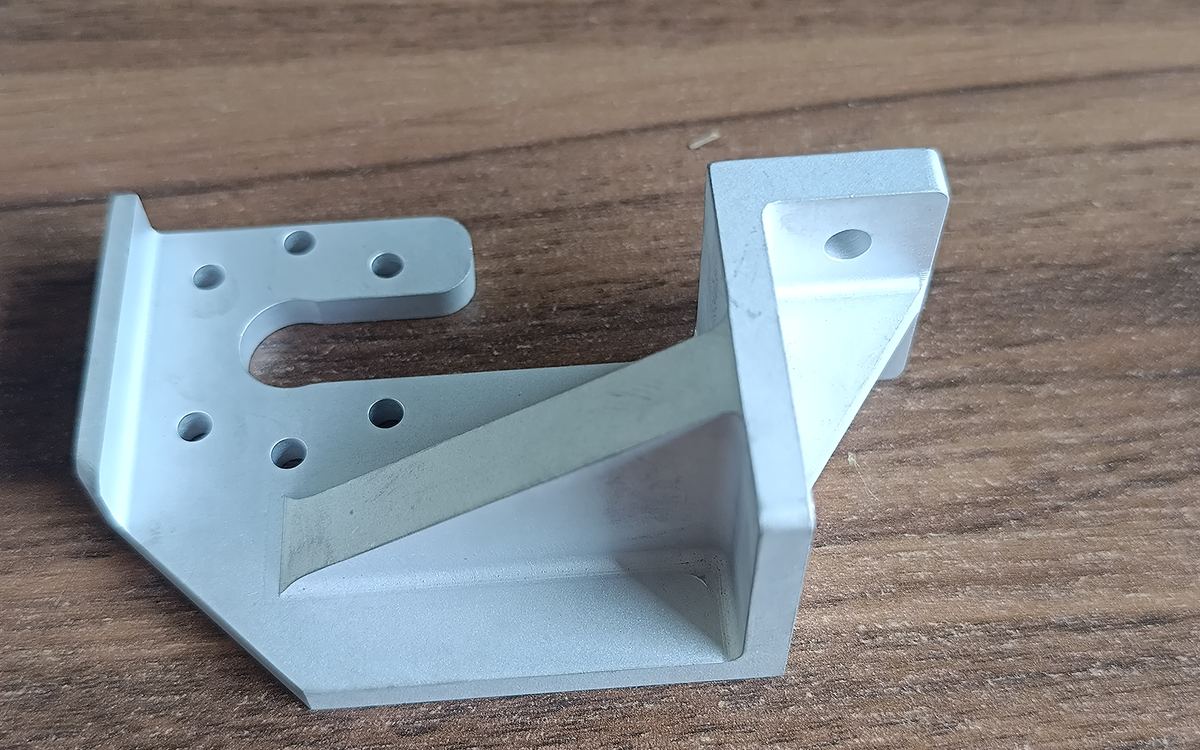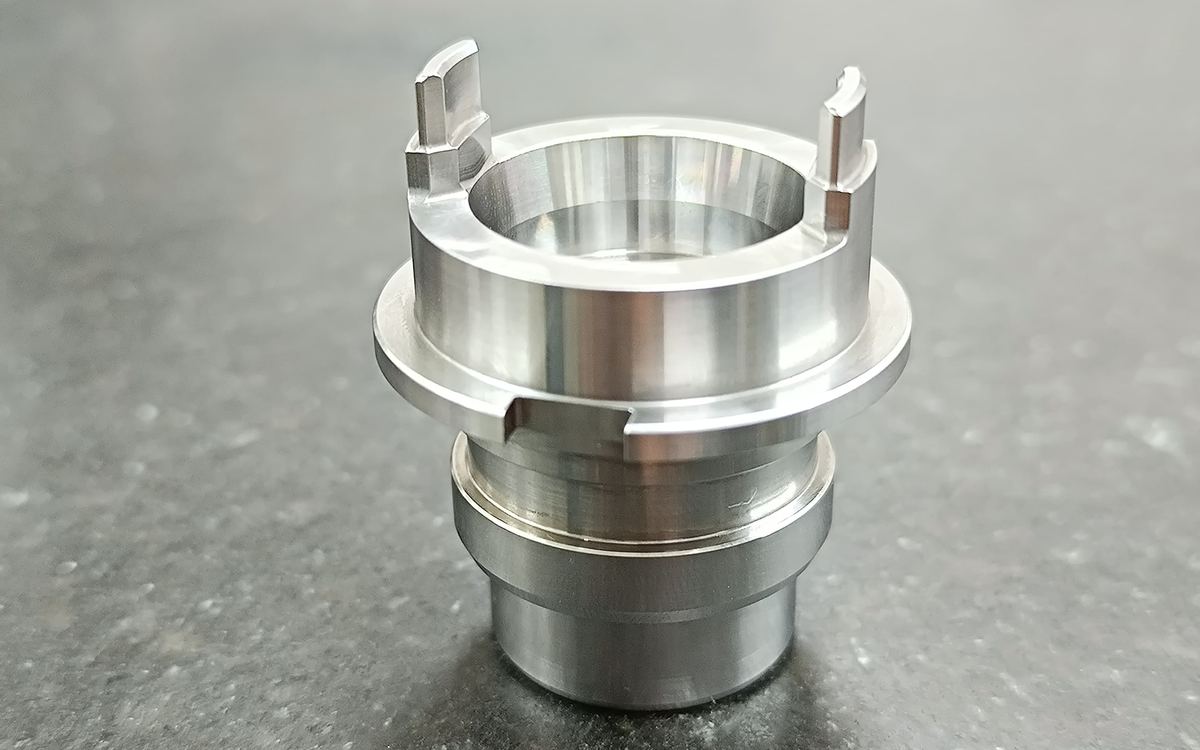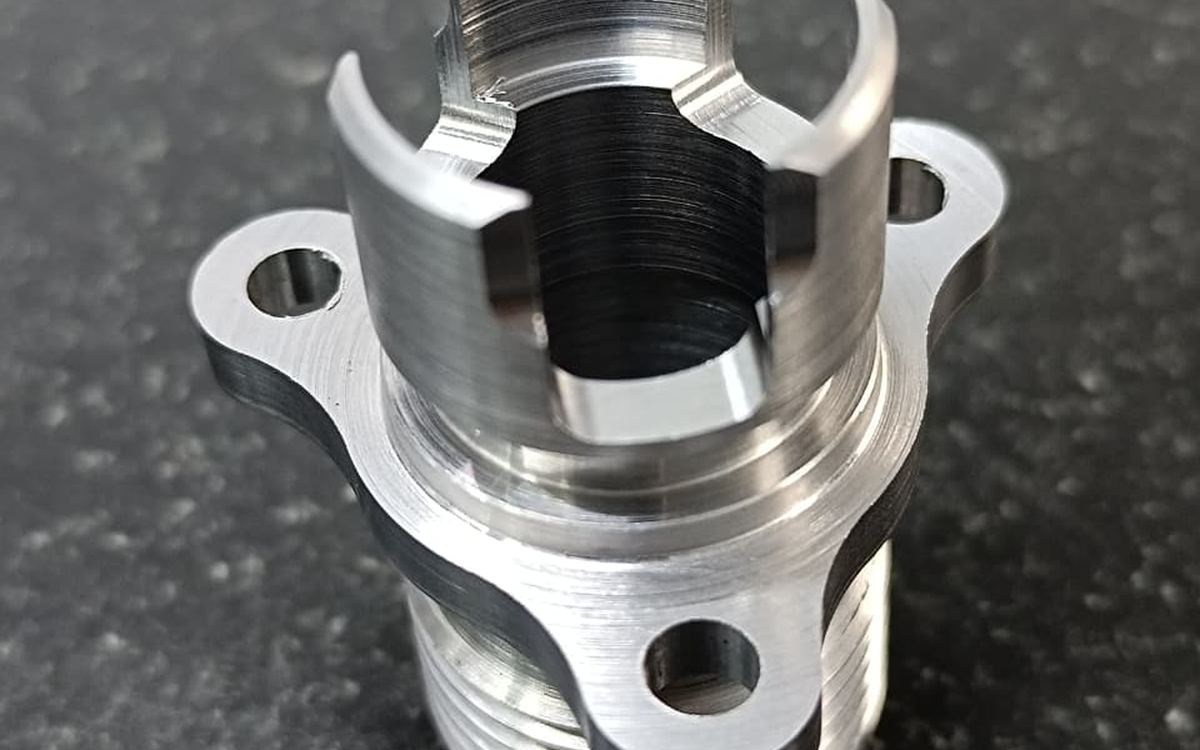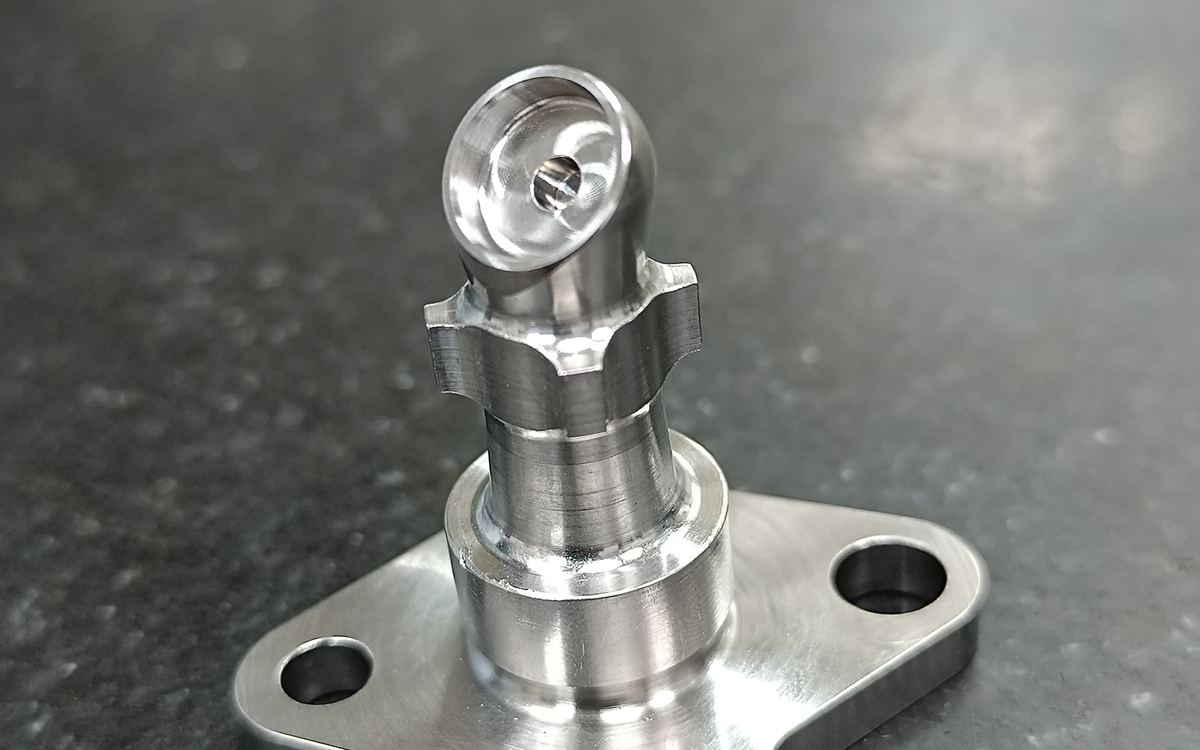
Titanium alloy Ti-6Al-4V (also called Grade 5) is used wherever high strength, low weight and corrosion resistance are needed together: aerospace structures and fasteners, medical implants and instruments, motorsport and marine hardware. It is also one of the more demanding materials to machine. Here is why, and what a capable machine shop does about it.
Why titanium is difficult to machine
- Low thermal conductivity: roughly 7 W/m·K, versus over 150 W/m·K for aluminium. Heat stays at the cutting edge instead of leaving with the chip, which wears tools quickly.
- High strength at temperature: the material stays strong in the hot cutting zone, so cutting forces remain high.
- Low modulus: titanium is about half as stiff as steel, so thin sections spring away from the tool and cause chatter.
- Chemical reactivity: at high temperature titanium tends to weld to the cutting edge (built-up edge), and fine chips can be a fire risk if allowed to accumulate.
Best practices for machining Ti-6Al-4V
Keep cutting speeds low, chip loads up
Titanium is cut at much lower surface speeds than steel, but with a consistent, healthy chip load. Rubbing (too low a feed) generates heat without removing material and work-hardens the surface.
Use rigid setups
Short tool stick-out, rigid workholding and stable machine tools reduce chatter. Thin walls are supported or machined in stages.
Plenty of coolant
High-pressure flood or through-tool coolant carries heat away and clears chips. Dry machining titanium is rarely a good idea.
Sharp, purpose-made tooling
Sharp carbide tools with coatings designed for titanium, positive rake geometry and variable-pitch end mills help break up harmonics.
Constant engagement toolpaths
Modern adaptive or trochoidal toolpaths keep tool engagement constant, avoiding heat spikes in corners and extending tool life.
Grade 5 vs Grade 2 vs Grade 23
| Grade | Type | Typical use |
|---|---|---|
| Grade 2 | Commercially pure | Chemical processing, marine; easier to machine, lower strength |
| Grade 5 (Ti-6Al-4V) | Alpha-beta alloy | Aerospace, high-strength components |
| Grade 23 (Ti-6Al-4V ELI) | Extra-low interstitial | Medical implants, better fracture toughness |
What this means for cost
Titanium parts cost more than aluminium or steel parts for three reasons: the raw material is expensive, machining is slower, and tools wear faster. You can help control cost by:
- Avoiding unnecessarily thin walls and deep, narrow pockets
- Using generous internal radii so larger, stiffer tools can be used
- Choosing near-net stock sizes to reduce the volume removed
- Tolerancing only functional features tightly
See our DFM tips and CNC cost factors for more.
Traceability matters
For aerospace and medical titanium, material certification to the relevant specification and heat-number traceability through every operation are non-negotiable. Ask your supplier how they control and segregate titanium stock.
Aeroedge International machines titanium Ti-6Al-4V Grade 5 for aerospace and medical applications under our AS9100D and ISO 9001:2015 quality system, with Mitutoyo CMM inspection and full material traceability. Send us your titanium part for a quote.