A CNC machined part is rarely finished when it comes off the machine. Surface treatments protect against corrosion and wear, improve appearance, and sometimes change dimensions in ways the drawing must allow for. This guide covers the finishes we're asked about most often.
As-machined surface roughness
Surface roughness is usually specified as Ra (average roughness) in micrometres.
| Ra (µm) | Description | Typical use |
|---|---|---|
| 3.2 | Standard machined finish, visible tool marks | Most non-critical surfaces |
| 1.6 | Fine machined finish | Mating faces, lightly loaded parts |
| 0.8 | Very fine, needs extra passes | Sealing faces, bearing fits |
| 0.4 and below | Ground, honed or polished | Dynamic seals, precision sliding surfaces |
Finer finishes cost more, so specify them only where function requires.
Bead blasting
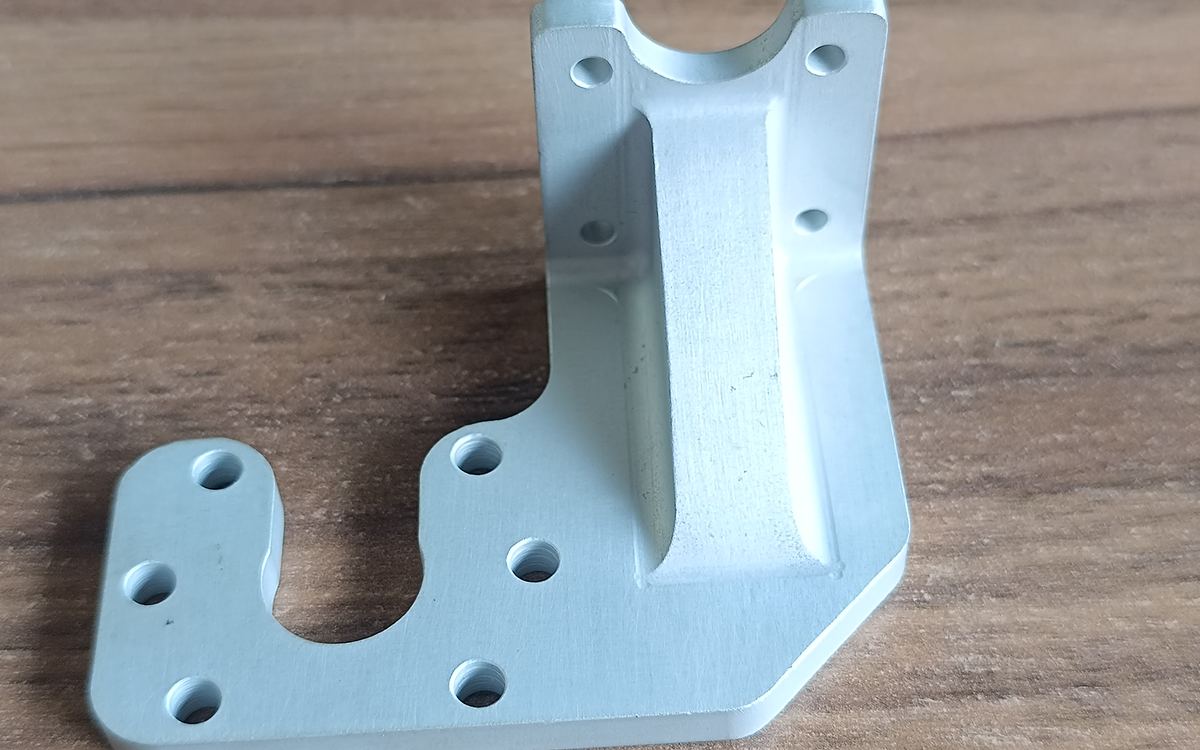
Blasting with glass beads gives a uniform matte texture and hides tool marks. It is often done before anodising for a premium appearance. It slightly roughens the surface, so critical features are usually masked.
Anodising (aluminium)
Anodising grows a hard oxide layer from the aluminium itself. The most common reference specification is MIL-PRF-8625.
- Type II (sulphuric acid): thin, decorative and protective. Can be dyed in colours or black. Adds only a few microns.
- Type III (hard anodise): much thicker and very wear-resistant. Used for sliding and wear surfaces. Roughly half the coating thickness grows outward, so precision bores and threads must be allowed for or masked.
Different alloys anodise differently. See 6061 vs 7075.
Chromate conversion coating
A thin conversion coating for aluminium that protects against corrosion while remaining electrically conductive. It is common on aerospace and electronics parts and is a good primer base.
Passivation (stainless steel)
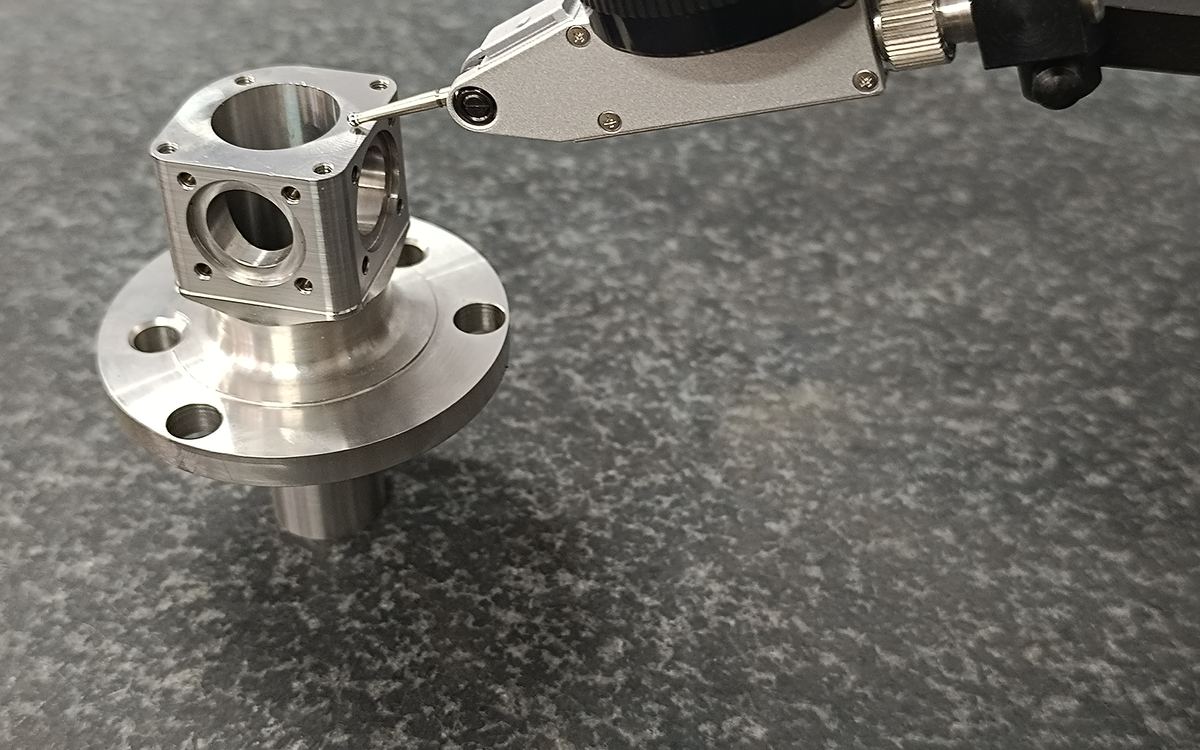
Passivation removes free iron from machined stainless surfaces and strengthens the natural chromium oxide layer, improving corrosion resistance. It does not change dimensions or appearance. Common specifications are ASTM A967 and AMS 2700. Passivation is standard for medical and food-contact stainless parts. See stainless steel grades.
Hard chrome plating
Hard chrome gives a very hard, low-friction, wear-resistant surface for hydraulic rods, shafts and tooling. It is often applied oversize and ground back to final dimension. Because hexavalent chrome is increasingly restricted, alternatives such as HVOF thermal spray coatings are also used.
Electroless nickel
A uniform nickel-phosphorus coating that follows the part's geometry exactly, including inside bores. It provides good wear and corrosion resistance on steel and aluminium.
Black oxide
A conversion coating for steel that gives a black finish with mild corrosion resistance (usually with an oil topcoat). It adds negligible thickness, so it's popular for precision steel parts and tooling.
Plan finishing early
- State the finish and specification on the drawing.
- Indicate masked areas (threads, bores, grounding points).
- Note whether dimensions apply before or after finishing.
- Allow lead time: finishing is often done by specialist subcontractors.
Aeroedge International coordinates anodising, hard chrome, passivation and other finishes through qualified partners, with process certificates supplied with your parts. Request a quote including finishing.