Milling and turning are the two core CNC machining processes, and most precision parts are made with one, the other, or both. Choosing correctly at the design stage affects cost, lead time and achievable tolerance. Here is a practical comparison.
How CNC turning works
In CNC turning, the workpiece rotates and a stationary cutting tool removes material. The machine is a CNC lathe or turning centre. Because the part spins around a single axis, turning naturally produces round features: outer diameters, bores, tapers, grooves, threads and faces.
Typical turned parts include shafts, pins, bushes, sleeves, spacers, nozzles, threaded fittings and bearing housings.
How CNC milling works
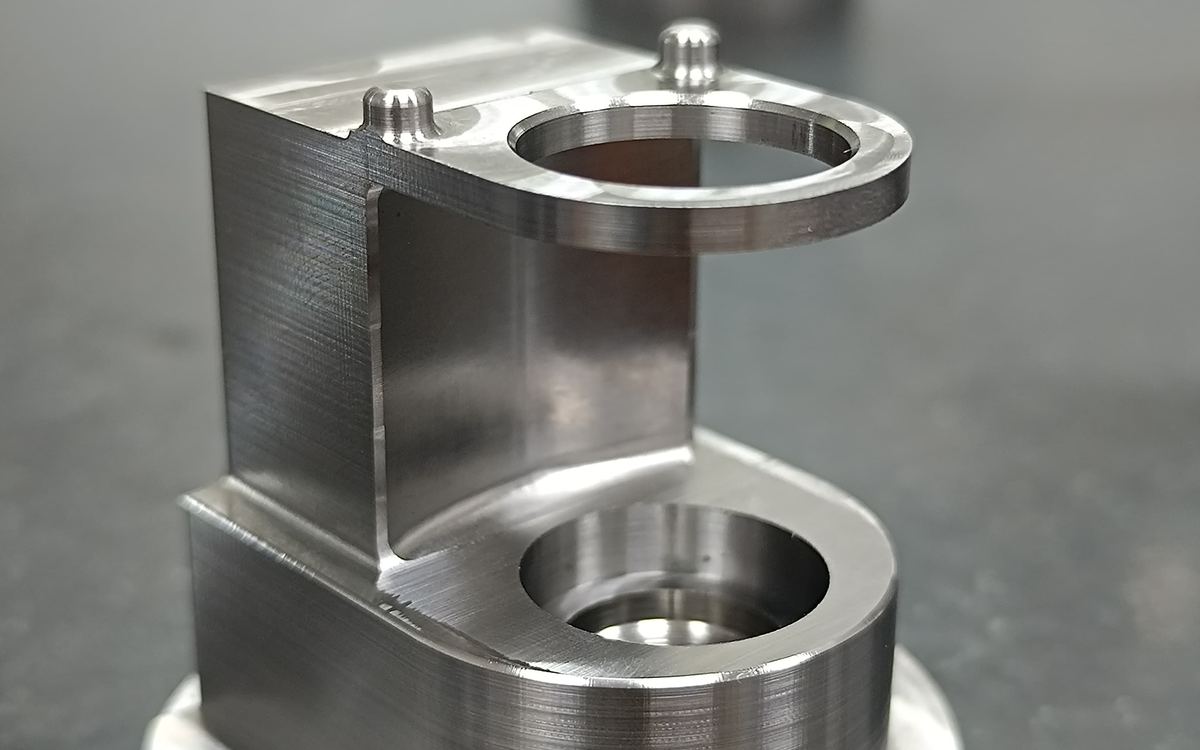
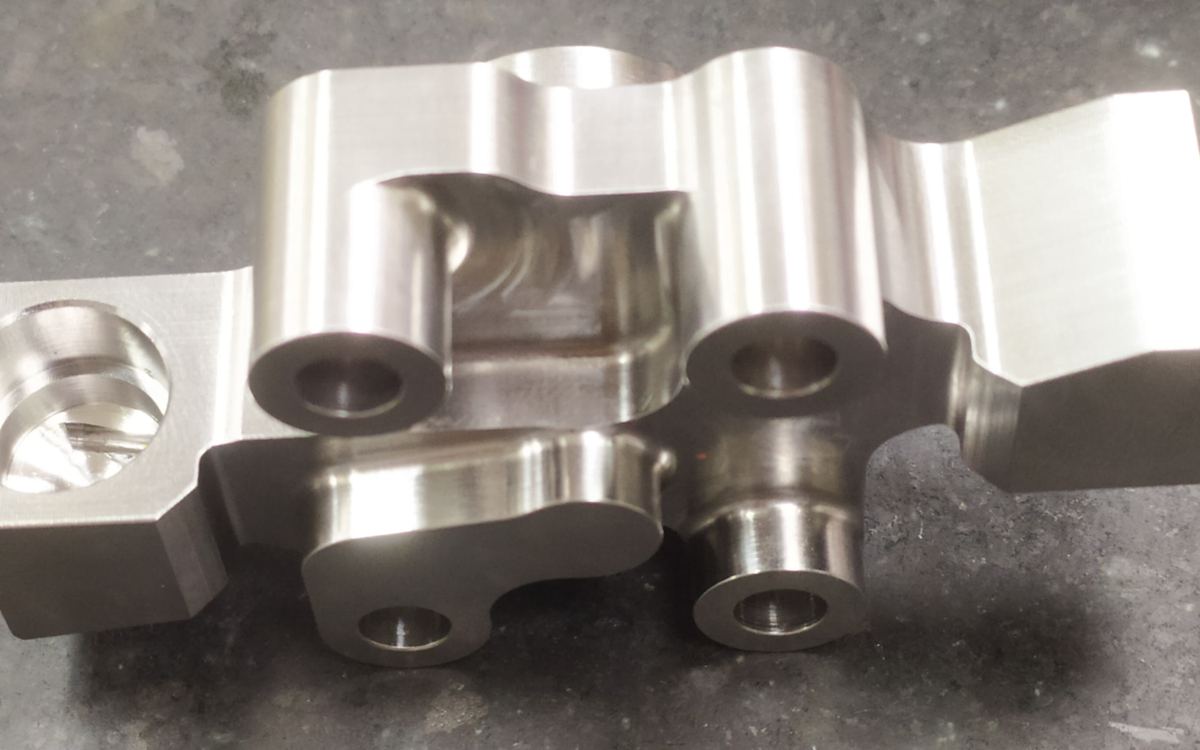
In CNC milling, the cutting tool rotates and moves across a fixed workpiece along three or more axes. Milling produces flat faces, pockets, slots, holes, contours and complex 3D surfaces.
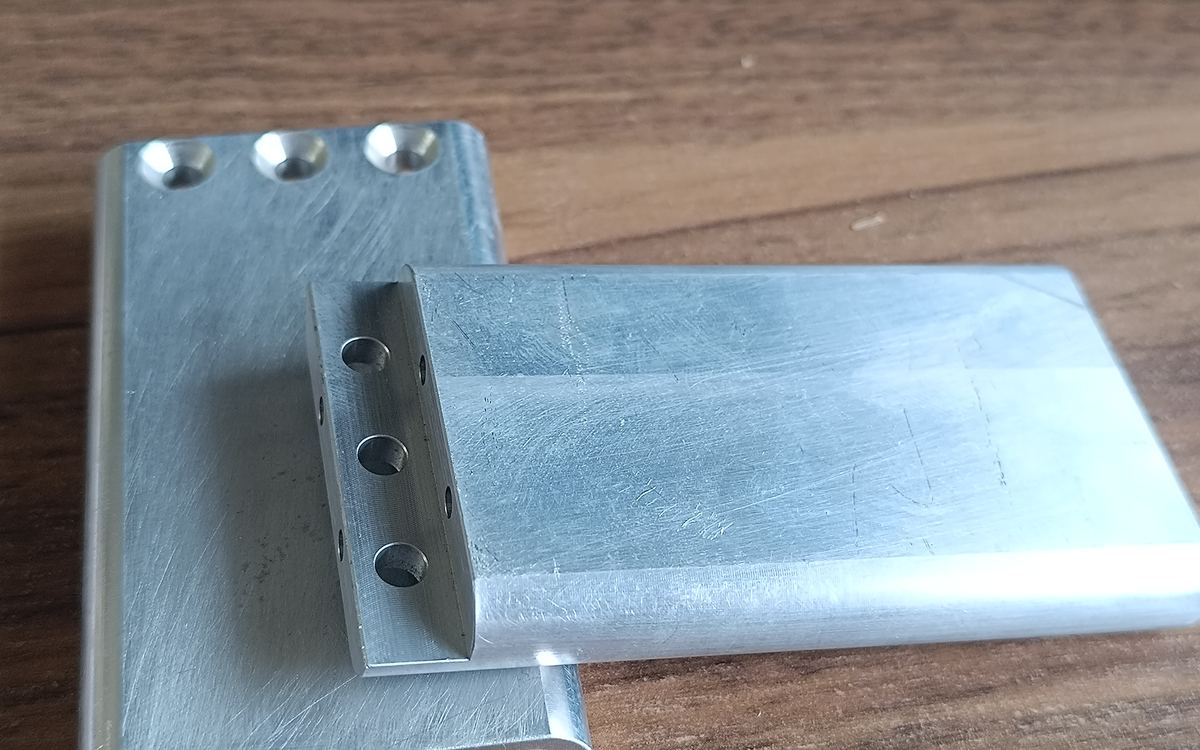
Typical milled parts include brackets, housings, manifolds, plates, enclosures, fixtures and structural aerospace components.
Side-by-side comparison
| CNC turning | CNC milling | |
|---|---|---|
| What moves | Workpiece rotates | Tool rotates |
| Best geometry | Round, axisymmetric | Prismatic, flat, contoured |
| Typical features | ODs, bores, threads, grooves, tapers | Pockets, slots, holes, faces, 3D surfaces |
| Cycle time for round parts | Fast | Slower |
| Concentricity | Excellent in one setup | Depends on setups |
| Raw stock | Round bar, tube | Plate, block, bar |
Which is cheaper?
For round parts, turning is almost always cheaper. Bar stock feeds efficiently, cycle times are short and concentric features are produced in one setup. Milling a cylindrical part from block wastes material and machine time.
For prismatic parts with pockets and hole patterns, milling is the only practical choice. Cost then depends on the number of setups, which is where 5-axis machining can help.
When you need both: mill-turn parts
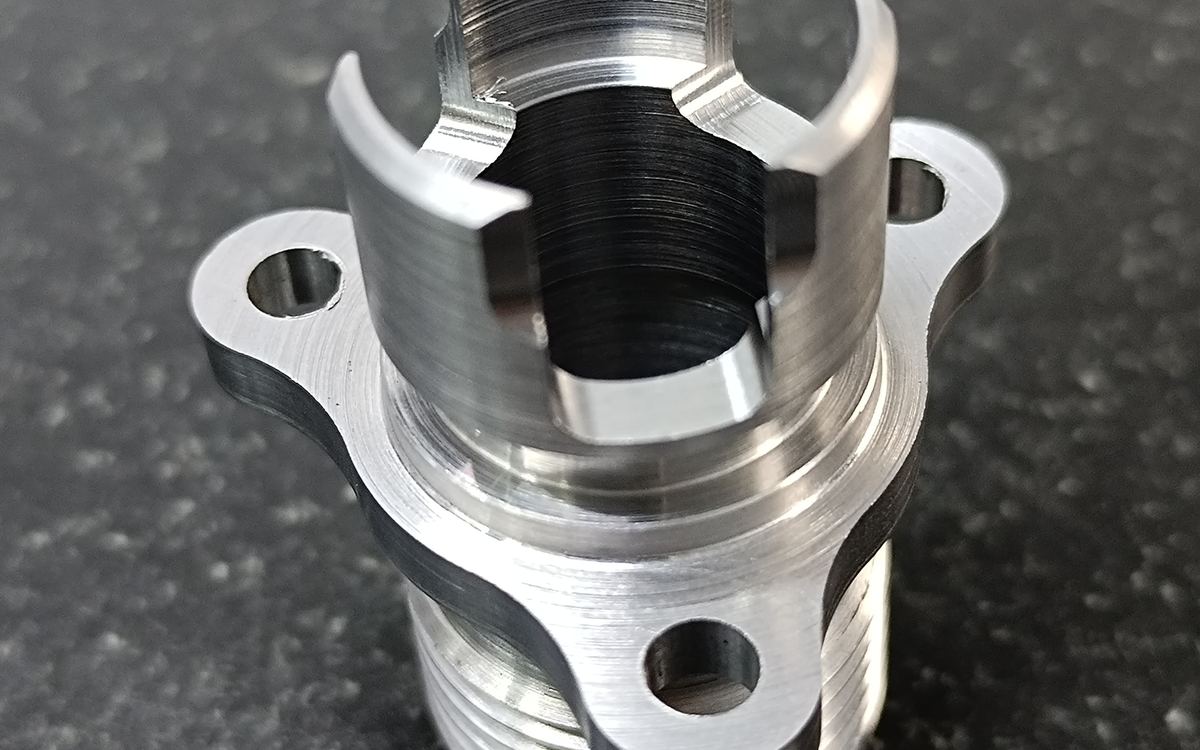
Many real components are mostly round but have milled features: cross holes, flats, keyways, slots or bolt-hole patterns on a flange. These are usually turned first and then moved to a milling machine, or produced on a mill-turn centre with live tooling.
When you design a part like this, a few things keep cost down:
- Reference milled features to the turned datum (usually the main bore or OD) so the second operation can locate on it.
- Avoid very tight positional tolerances between milled and turned features unless they are functionally required.
- Keep cross holes perpendicular to the axis where possible.
Tolerances and surface finish
Both processes can hold tight tolerances on modern equipment. Turning typically gives excellent roundness and surface finish on diameters, often Ra 0.8–1.6 µm as machined. Milling gives excellent flatness and positional accuracy for hole patterns. The real limits come from part rigidity, material and thermal control rather than the process name. Our guide to CNC machining tolerances goes deeper.
Quick decision guide
- Mostly round with diameters and threads? Turning.
- Flat, boxy or contoured? Milling.
- Round with flats, slots or cross holes? Turning followed by milling.
- Complex shapes with features on many faces? 5-axis milling.
Not sure which route suits your design? Aeroedge International offers both CNC milling and CNC turning under one roof, so we choose the process that gives the best cost and accuracy for your part. Send us your drawing and we'll recommend a route with the quote.